
As a retail trader, you do not deal directly with big banks. You access the market through a broker, which passes on or bridges your orders to liquidity providers.
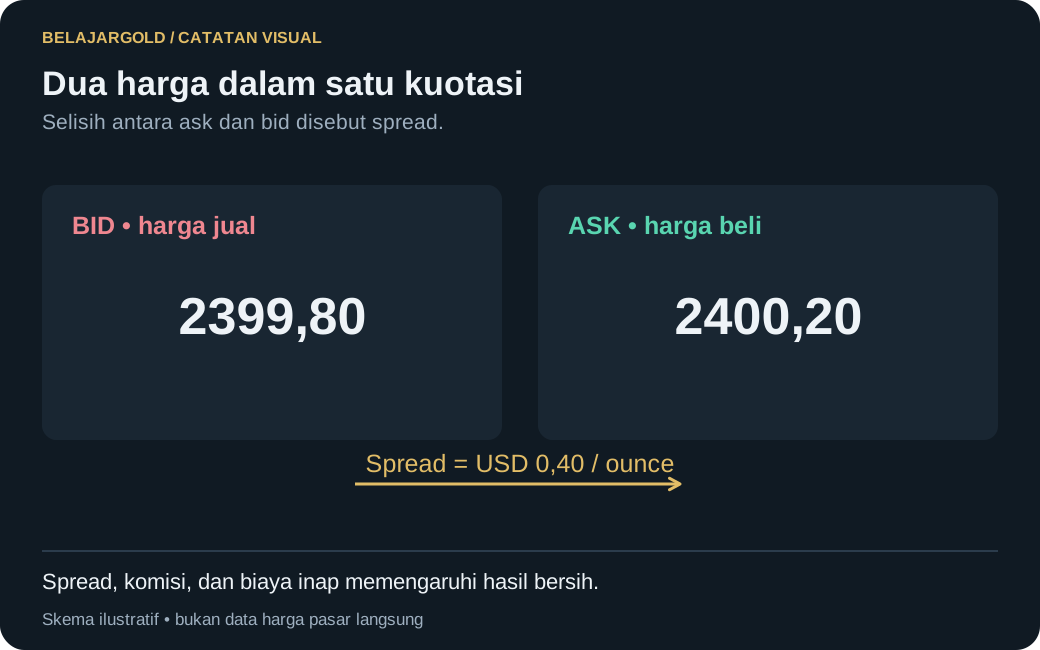
Bid, Ask, and Spread
- Bid — the price when you sell.
- Ask — the price when you buy. Always slightly higher than the bid.
- Spread — the difference between bid and ask. This is one of your transaction costs.
As soon as a position is opened, you are automatically "down" by the spread, because you have to close on the opposite side of the price. Spreads usually widen when liquidity is low (at the daily rollover, or just before major news releases).
Other types of costs
- Commission — a fixed fee per lot on some account types.
- Swap / rollover — overnight interest charged or paid when a position is held past a certain time.
Key points
- The broker is your access point; choose one that is regulated and transparent about costs.
- Spread = a cost that is always there. Factor it into your plan, especially for fast styles (scalping).
Save your learning progress
Sign up free to mark lessons as completed and unlock all member lessons.
Sign Up Free
Risk disclaimer: all content on this site is provided for educational purposes and is not financial advice, signals, an invitation to trade, or a promise of profit. Trading carries a high risk and may result in the loss of part or all of your capital. Check the legality of service providers in your jurisdiction.